The Naked Truth About Motiva® Breast Implants: FAQs
April 30, 2026
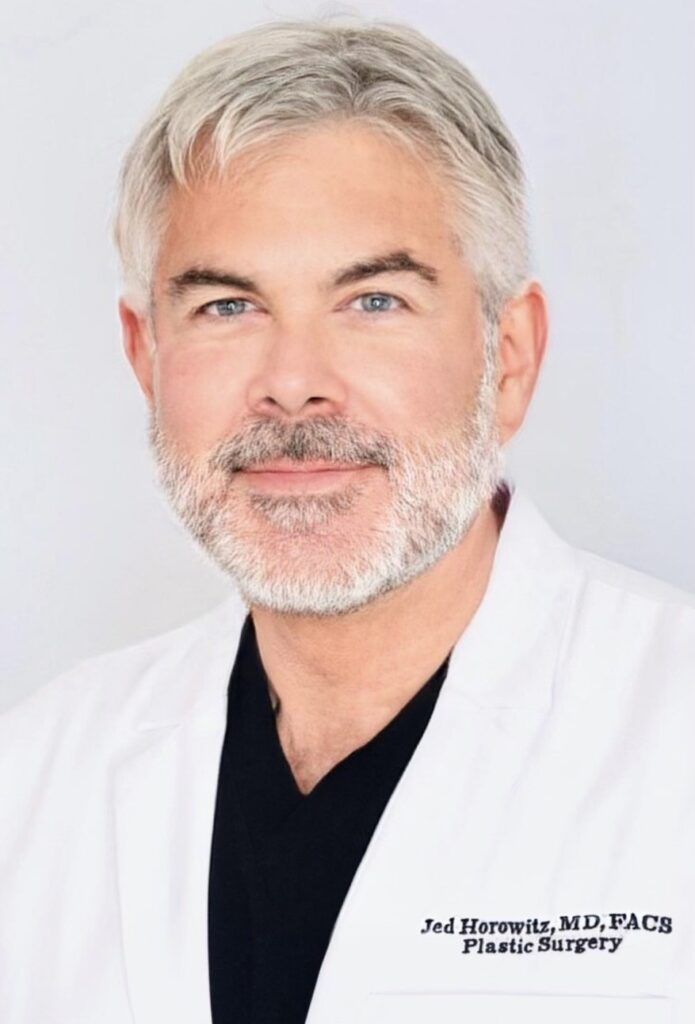
By Dr. Jed H. Horowitz, MD, FACS
Newport Beach Plastic Surgeon
Pacific Center for Plastic Surgery
Orange County, California
The Naked Truth: Q&A Guide by Dr. Jed Horowitz, Board-Certified Plastic Surgeon
What are the different types of Motiva® breast implants?
Motiva® breast implants are primarily available in two core designs:
- Motiva Round® implants – These provide fullness in both the upper and lower portions of the breast and are ideal for patients seeking a more enhanced or lifted appearance.
- Motiva Ergonomix® implants – These are designed to behave more like natural breast tissue. They take on a teardrop shape when upright and become fuller and rounder when lying flat.
A newer version, known in Europe as Motiva JOY® (Ergonomix2), represents the next generation of this technology but is not currently available in the United States as of April 2026.
What is Motiva Ergonomix® and how is it different from traditional implants?
Motiva Ergonomix® implants use a progressive cohesive silicone gel that allows the implant to dynamically adapt to body position.
This means:
- When standing → the implant settles naturally into a teardrop shape
- When lying down → it becomes rounder and fuller
- With movement → it shifts in a way that mimics natural breast tissue
Compared to traditional implants, this creates a more natural look and feel, especially in motion.
Which Motiva implant shape is best for me?
The ideal implant depends on your anatomy and aesthetic goals:
- Round implants
- More upper pole fullness
- More visible enhancement
- Often preferred for a “glamour” look
- Ergonomix® implants
- More natural slope
- Greater lower pole fullness when upright
- Preferred for subtle, “undetectable” results
Quick Decision Matrix (What Most Patients Choose)
| Your Priority | Typical Choice |
|---|---|
| “I don’t want anyone to know.” | Ergonomix® + Moderate profile |
| “I want noticeable cleavage/fullness.” | Round® + Moderate+/High profile |
| Athletic, lean tissue | Ergonomix® + conservative size |
| Post-pregnancy volume loss | Either, often Round® for upper pole restoration |
| Revision/correction | Case-specific (often Ergonomix® for softness) |
A proper consultation evaluates:
- Chest wall dimensions
- Existing breast tissue
- Skin elasticity
- Lifestyle and athletic activity
Who is a good candidate for Motiva implants?
Motiva implants can be used for:
- Primary breast augmentation
- Revision breast surgery
- Breast reconstruction (including post-cancer patients)
General requirements include:
- Age 18 or older
- Good overall health
- No active infection
- Not pregnant or breastfeeding
- No untreated breast disease
What profiles are available for Motiva Breast Implants?
The profile selection is one of the most critical decisions, often more important than implant size.
Motiva® Implant Profiles (Projection Explained)
The Implant profile determines how far the implant projects forward from the chest wall, not the size (cc). The Three Main Motiva Profiles:
1. Mini Profile (Low Projection)
- Widest base, least projection
- Creates:
- Subtle enhancement
- Gentle, natural slope
- “Athletic” or understated look
- Best for:
- Wide chest
- Thin patients wanting minimal augmentation
2. Demi Profile (Moderate Projection) — MOST COMMON
- Balanced width and projection
- Creates:
- Natural fullness
- Soft upper pole
- Noticeable but not exaggerated cleavage
- Best for:
- Most patients
- First-time augmentation
3. Full Profile (Moderate–High Projection)
- Narrowest base, most projection
- Creates:
- More cleavage
- Fuller upper pole
- Rounder “augmented” appearance
- Best for:
- Narrow chest
- Patients looking for more visible results
4. The Core Profile
- This is higher than the full profile but is not available in the United States at this time.
For the same volume, different profiles create completely different shapes. What many of our patients don’t realize is that a 300cc Mini vs. 300cc Full implant will look completely different:
- Mini → wider, flatter, more natural
- Full → narrower, more projected, more cleavage
Most Newport Beach patients today choose:
- Ergonomix® + Demi profile for natural results
Motiva implants are typically positioned as a premium option due to:
- Natural movement
- Lower complication trends
- Advanced design features
Simple Decision Guide
| Goal | Likely Choice |
|---|---|
| Natural, subtle | Ergonomix® + Mini or Demi |
| Balanced, most common | Ergonomix® or Round + Demi |
| Fuller, more dramatic | Round + Full |

Are Motiva implants safe?
Motiva implants are considered among the most advanced and safety-focused implants available today.
Key features include:
- BlueSeal Technology reduces silicone bleed and enhances durability
- Smooth nano-surface shell (SmoothSilk®) designed to reduce bacterial adhesion
- Lower reported rates of capsular contracture compared to older technologies
Motiva implants are FDA-approved in the United States.
Like all breast implants, risks exist, including:
- Capsular contracture
- Implant rupture
- Rare conditions such as Breast Implant-Associated Anaplastic Large Cell Lymphoma, primarily associated with textured implants rather than smooth-surface devices like Motiva
What size implant should I choose?
Implant size is highly individualized.
Important principles include:
- The implant should fit within your natural breast footprint.
- It should align with your body proportions and lifestyle.
Consider:
- Athletic patients may prefer moderate sizing
- Larger implants may contribute to back or shoulder discomfort over time
At Pacific Center for Plastic Surgery, we use:
- Clinical measurements
- Implant sizers
- Advanced planning tools
to help you make an informed decision.
How long do Motiva implants last?
Motiva implants are long-lasting medical devices, but not lifetime devices.
Typical expectations:
- Many implants last 10–15 years or longer
- Replacement is only necessary if a problem arises
Recommended monitoring:
- Imaging (MRI or ultrasound) every 5 years
- Annual clinical follow-up
What is inside a Motiva implant?
Motiva implants contain:
- Highly cohesive silicone gel
- Maintains structure
- Provides a soft, natural feel
- A multi-layer shell with a barrier layer that enhances durability and minimizes gel diffusion
Do Motiva implants feel natural?
Yes, they do, especially the Ergonomix® line.
These implants are specifically engineered to:
- Move naturally
- Respond to gravity
- Feel softer than traditional implants
However, no implant perfectly replicates natural breast tissue.
Do Motiva implants need to be replaced?
Not routinely.
They should only be replaced if:
- A complication occurs
- You desire a change in size or shape
Routine surveillance is more important than automatic replacement.
Is there an alternative to breast implants?
Yes, it is called autologous fat transfer (fat grafting).
It involves:
- Liposuction from another body area
- Injection of fat into the breast
Advantages:
- Your own tissue is used
- Looks more natural
Limitations:
- Less volume increase
- Variable fat survival
What is the Motiva warranty?
Motiva offers the Always Confident Warranty, which includes:
- Lifetime replacement for implant rupture
- Replacement for capsular contracture (within 10 years)
Additional extended coverage options may be available.
What is the Cost of Motiva® Breast Augmentation in Newport Beach / Orange County (2026)?
The Typical Total Cost Range for Motiva® Implant Breast Augmentation is:
- $9,500 – $19,000
Cost Breakdown
1. Surgeon Fee
- $8,000 – $15,000
- Higher for:
- Board-certified, high-demand surgeons
- Revision or complex cases
2. Facility + Anesthesia
- $2,000 – $4,500
3. Implant Cost (Motiva Premium)
- $2,000 – $3,500
Motiva implants are typically:
- More expensive than Mentor or Allergan
- Due to:
- Newer technology
- Advanced gel + surface design
What Increases Cost?
- Revision surgery
- Combining procedures (lift + augmentation)
- Use of mesh (internal bra)
- High-end surgical centers
- The surgeon’s reputation in the Newport Beach / Beverly Hills market

How do I choose the Best Motiva ® Implant Surgeon for my breast augmentation?
You should look for:
- Certification by the American Board of Plastic Surgery
- Extensive experience in breast surgery
- Strong before-and-after results
- A supportive, knowledgeable clinical team
Most importantly, you should feel fully informed and confident in your care.
Motiva vs Mentor: Which implant is better?
Both are highly respected:
- Mentor
- Long-standing clinical track record
- Traditional implant design
- Motiva
- Newer technology
- Designed for natural movement
- Advanced surface engineering
The best choice depends on your anatomy and goals, not just the brand.
The Naked Truth
Breast augmentation continues to evolve toward one goal: natural, individualized results.
Motiva implants represent a significant step forward, offering:
- More natural movement
- Advanced safety features
- Versatility in both primary and revision surgery
The best outcome is not obvious augmentation; it is refinement that looks like you.
About Dr. Jed Horowitz
Dr. Jed Horowitz is a board-certified plastic surgeon certified by the American Board of Plastic Surgery and based in Newport Beach, Orange County, California.
He is a founder of Pacific Center for Plastic Surgery and BioSpa® Medical Spa, where he specializes in:
- Breast augmentation and revision surgery
- Facial rejuvenation procedures
- Advanced aesthetic and reconstructive techniques
Dr. Horowitz has participated in multiple FDA clinical studies involving breast implants and is recognized for his expertise in delivering natural, proportionate, and individualized results.
He is also the creator of “The Naked Truth” educational series, designed to provide transparent, patient-focused insights into cosmetic and reconstructive surgery.
Start your Journey – Request a consultation today!
Want more information before scheduling your consultation?
Find out more about pricing and payment plan options by visiting our financing page, or call our Newport Beach plastic surgery office at (949) 720-3888.
References
- Adams, W.P. Jr. and Mallucci, P. (2012) ‘Breast augmentation’, Plastic and Reconstructive Surgery, 130(4), pp. 597e–611e.
- Maxwell, G.P. and Gabriel, A. (2017) ‘The evolution of breast implants’, Clinics in Plastic Surgery, 44(1), pp. 1–13.
- Sigalove, S. et al. (2019) ‘Prepectoral breast reconstruction: clinical outcomes’, Plastic and Reconstructive Surgery, 143(6), pp. 148–156.
- Stevens, W.G. et al. (2020) ‘Ten-year core study data for silicone breast implants’, Aesthetic Surgery Journal, 40(1), pp. 1–12.
- Motiva USA (2024) Motiva Implants Product Information. Available at: https://motivaimplants.com
- U.S. Food and Drug Administration (FDA) (2023) Breast Implants – Safety Communication.
- Loch-Wilkinson, A. et al. (2017) ‘Breast implant–associated lymphoma’, Plastic and Reconstructive Surgery, 140(4), pp. 645–654.