The Naked Truth About PRP and PRF
July 27, 2026
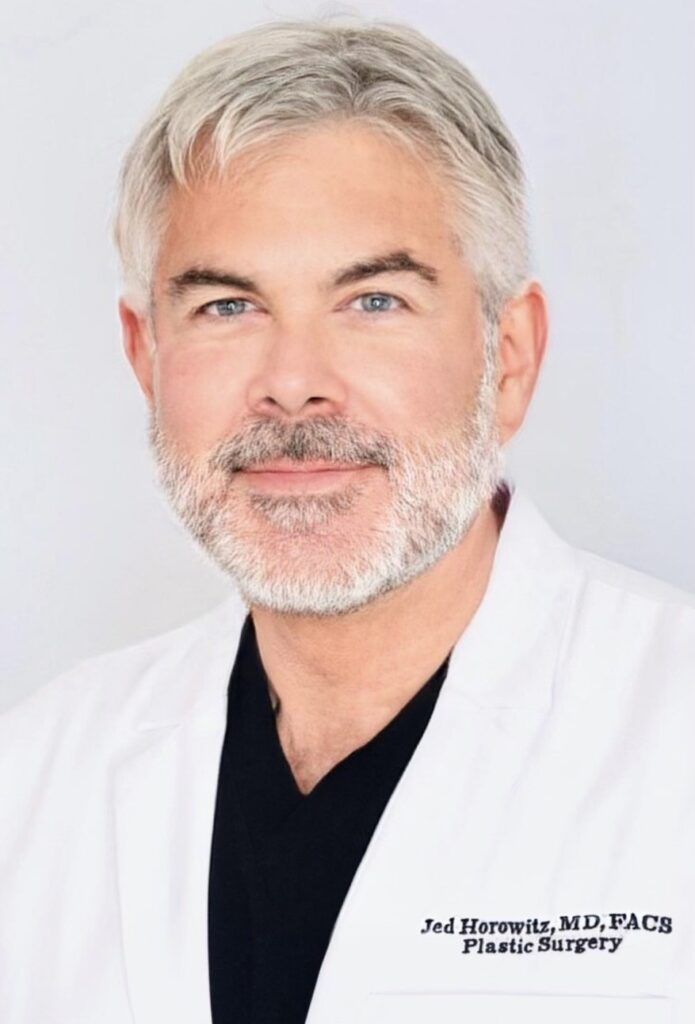
By Dr. Jed H. Horowitz, MD, FACS
Newport Beach Plastic Surgeon
Pacific Center for Plastic Surgery
Orange County, California
Natural Regenerative Skin Rejuvenation and Hair Restoration: What’s the Difference?

PRP and PRF for Hair Restoration
Hair loss affects millions of men and women and is often one of the earliest visible signs of aging. While genetics play the largest role in androgenetic alopecia (male and female pattern hair loss), inflammation, hormonal changes, stress, illness, nutritional deficiencies, and aging all contribute to progressive thinning.
One of the most exciting applications of regenerative medicine is the use of PRP and PRF to improve the health of existing hair follicles.
The goal of treatment is not to create new hair follicles. Rather, PRP and PRF are designed to improve the function of follicles that are still alive but producing thinner, weaker hairs. These treatments help create a healthier scalp environment by increasing blood supply, reducing inflammation, and delivering growth factors that support follicular activity.
Growth factors such as platelet-derived growth factor (PDGF), vascular endothelial growth factor (VEGF), insulin-like growth factor-1 (IGF-1), and transforming growth factor-beta (TGF-β) appear to prolong the anagen, or growth phase, of the hair cycle while stimulating the stem cells that surround existing follicles.
As a result, many patients notice:
- Reduced daily shedding
- Increased hair density
- Thicker individual hair shafts
- Improved hair quality
- Slower progression of hereditary hair loss
PRP has been studied extensively for androgenetic alopecia, while PRF is gaining popularity because its fibrin matrix provides a slower, more sustained release of regenerative growth factors. Although long-term comparative studies are still evolving, many physicians believe this prolonged biologic activity may enhance follicular stimulation.
Patients should understand that PRP and PRF work best when hair follicles are still viable. Completely bald areas where follicles have disappeared are unlikely to regrow hair with platelet therapies alone. For these individuals, hair transplantation may be the more appropriate option, often combined with PRP or PRF to improve graft survival and healing.
Combining PRP and PRF with Other Aesthetic Treatments
One of the greatest strengths of regenerative medicine is that PRP and PRF are rarely used in isolation. Instead, they are frequently combined with other procedures to improve healing, enhance results, and stimulate greater collagen remodeling.
Microneedling
Microneedling creates thousands of controlled microchannels within the skin. When PRP or PRF is applied immediately afterward, growth factors penetrate these channels and enhance the body’s natural wound-healing response. This combination has been shown in many clinical studies to improve fine lines, acne scars, enlarged pores, and overall skin texture more effectively than microneedling alone.
Fractional CO₂ Laser Resurfacing
Fractional laser treatments intentionally create microscopic areas of controlled injury. Applying PRP after laser resurfacing may accelerate healing, reduce redness, and improve patient comfort while supporting collagen production during recovery.
Radiofrequency Microneedling
Radiofrequency (RF) microneedling combines mechanical stimulation with thermal energy to remodel collagen deep within the dermis. PRF may further enhance this process by providing a sustained delivery of regenerative proteins during the weeks following treatment.
Fat Grafting
Some plastic surgeons combine PRP or PRF with autologous fat grafting. Laboratory and clinical research suggests that platelet concentrates may improve the survival of transplanted fat by encouraging early blood vessel formation, although protocols continue to evolve.
Injectable BioFillers
PRF may also be used as a natural regenerative filler in selected patients seeking subtle improvement in delicate facial areas. While it does not replace traditional hyaluronic acid fillers when significant volume is required, it can certainly enhance skin quality and provide modest soft-tissue support.
Common Combination Treatments
| Procedure | Benefit of Adding PRP/PRF |
| Microneedling | Improved collagen production and faster healing |
| Fractional CO₂ Laser | Reduced downtime and enhanced skin remodeling |
| RF Microneedling | Synergistic collagen and elastin stimulation |
| Hair Restoration | Increased follicular support and scalp vascularity |
| Fat Transfer | May improve graft survival and tissue healing |
| Injectable PRF | Natural improvement in skin quality and subtle volume |

Who Is a Good Candidate?
Healthy adults with realistic expectations are often excellent candidates for PRP or PRF treatments.
Ideal candidates include individuals with:
- Early facial aging
- Fine wrinkles
- Mild skin laxity
- Acne scars
- Sun-damaged skin
- Crepey skin around the eyes or neck
- Early hair thinning
- Patients seeking more natural treatment options
Patients with significant volume loss, advanced skin laxity, or severe hair loss may benefit from combining regenerative treatments with fillers, surgery, laser resurfacing, or hair transplantation.
Treatment Expectations and Recovery
Because PRP and PRF stimulate the body’s own healing response, improvements develop gradually rather than immediately.
Most patients experience mild swelling, redness, or bruising for 1 to 3 days following the treatment.
Collagen remodeling continues for several months, making patience an important part of the treatment process.
Expected Timeline
| Time After Treatment | Typical Changes |
| 1–3 days | Mild swelling and healing |
| 2–4 weeks | Improved skin hydration and texture |
| 6–8 weeks | Early collagen remodeling |
| 3 months | Visible improvement in skin quality and hair thickness |
| 6 months | Peak collagen remodeling and optimal results |
Many treatment plans include a series of three sessions spaced approximately four to six weeks apart, followed by maintenance treatments once or twice yearly, depending on the patient’s goals.
The Naked Truth
PRP and PRF represent one of the most exciting advances in regenerative aesthetics because they encourage the body to repair itself rather than relying solely on synthetic products or more invasive procedures.
The naked truth is this:
These treatments are not magic, and they are not substitutes for surgery when surgery is indicated. They cannot completely erase wrinkles, restore decades of lost volume, or regrow hair where follicles no longer exist.
What they can do is improve your skin quality, stimulate collagen and elastin production, enhance healing, and support healthier hair growth using your own natural biology.
For many patients, that is exactly what they are looking for—a subtle, refreshed appearance that looks healthy, natural, and authentically their own.
When combined with thoughtful treatment planning and performed by experienced medical professionals, PRP and PRF are valuable tools in modern facial rejuvenation and hair restoration.
Selected References
American Academy of Dermatology Association (2024) Platelet-rich plasma (PRP): What you should know. Available at: https://www.aad.org
American Society of Plastic Surgeons (2024) Platelet-rich plasma (PRP). Available at: https://www.plasticsurgery.org
Cervelli, V., Nicoli, F., Gentile, P. and Garcovich, S. (2014) ‘Platelet-rich plasma and hair loss: Clinical experience and review of the literature’, BioMed Research International, 2014, Article ID 437935.
Gentile, P. and Garcovich, S. (2020) ‘Systematic review of platelet-rich plasma in androgenetic alopecia’, Dermatologic Therapy, 33(6), e14204.
International Society of Hair Restoration Surgery (2024) Patient education: Platelet-rich plasma. Available at: https://ishrs.org
Marx, R.E. (2004) ‘Platelet-rich plasma: Evidence to support its use’, Journal of Oral and Maxillofacial Surgery, 62(4), pp. 489–496.
NewBeauty Magazine (2024) Everything You Need to Know About PRF and PRP for Skin Rejuvenation. Available at: https://www.newbeauty.com
Sclafani, A.P. (2011) ‘Platelet-rich fibrin matrix for facial aesthetic soft-tissue augmentation’, Facial Plastic Surgery, 27(3), pp. 270–276.
Shashank, B., Bhushan, M., Mounesh, T. and Suresh, D. (2021) ‘Platelet-rich plasma in dermatology and aesthetic medicine: Current concepts’, Journal of Cutaneous and Aesthetic Surgery, 14(2), pp. 129–138.
Shin, M.K., Lee, J.H., Lee, S.J. and Kim, N.I. (2012) ‘Platelet-rich plasma combined with fractional laser for skin rejuvenation’, Dermatologic Surgery, 38(4), pp. 623–630.
Zhang, M., Park, G., Zhou, X. and Wang, Y. (2023) ‘Platelet-rich plasma and platelet-rich fibrin in aesthetic medicine: Current evidence and future directions’, International Journal of Molecular Sciences, 24(18), 13925.