The Naked Surgeon™: The Naked Truth About Otoplasty (Ear Surgery)
March 30, 2026
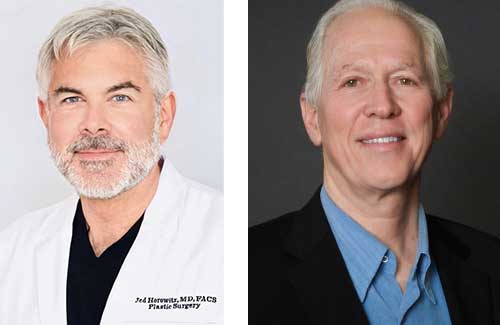
By Dr. Jed H. Horowitz & Dr. Larry S. Nichter
Board-Certified Plastic Surgeons
Pacific Center for Plastic Surgery
Newport Beach, Orange County, California
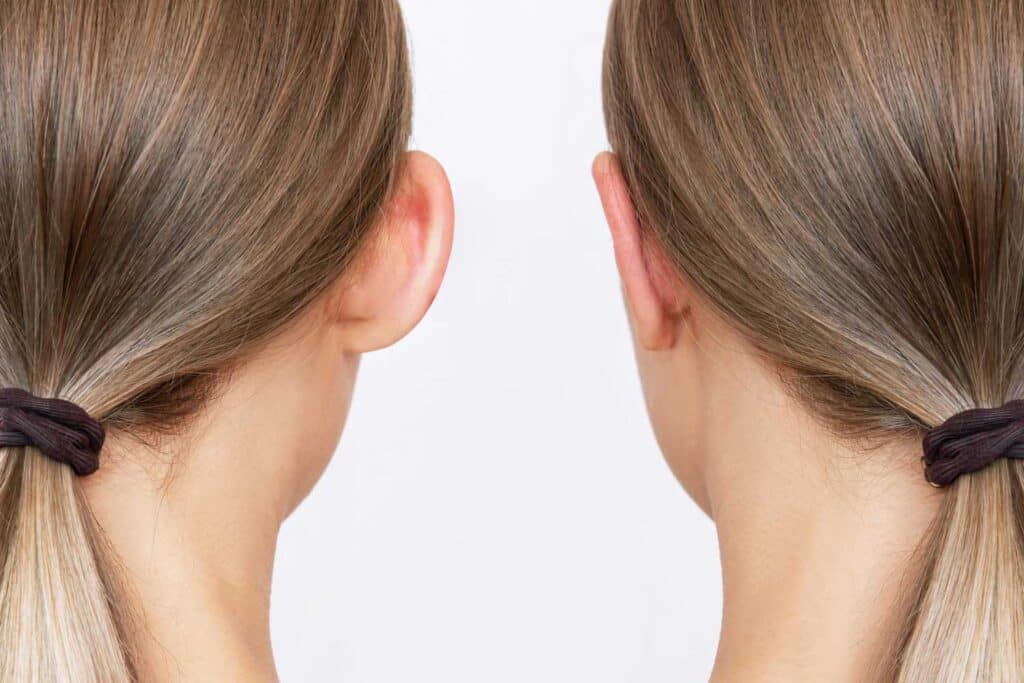
There are very few procedures in plastic surgery that can create such a meaningful change with a relatively small adjustment as otoplasty. And yet, it is one of the most misunderstood procedures.
Let’s start with the truth.
Most patients who consider ear surgery are not trying to look different. They are not trying to look like someone else. They are not chasing a trend. What they are looking for—almost universally—is balance. They want their ears to stop drawing attention away from their face. They want to feel comfortable in photographs, in conversation, and in everyday life without thinking about their ears. Whether our patient is a young child or an adult, their goals are very similar. At Pacific Center for Plastic Surgery in Newport Beach, we want to help our patients achieve natural, symmetric, beautiful ears that will make them feel good about themselves and confident for a lifetime.
That is the real reason people pursue otoplasty.
Otoplasty, often referred to as ear pinning, is a procedure designed to reshape and reposition the ears so they sit in better proportion to the head and face. It is not about making ears smaller in a dramatic way or flattening them against the head. In fact, when done correctly, it should never look like surgery at all. Always natural.
The best results are invisible.
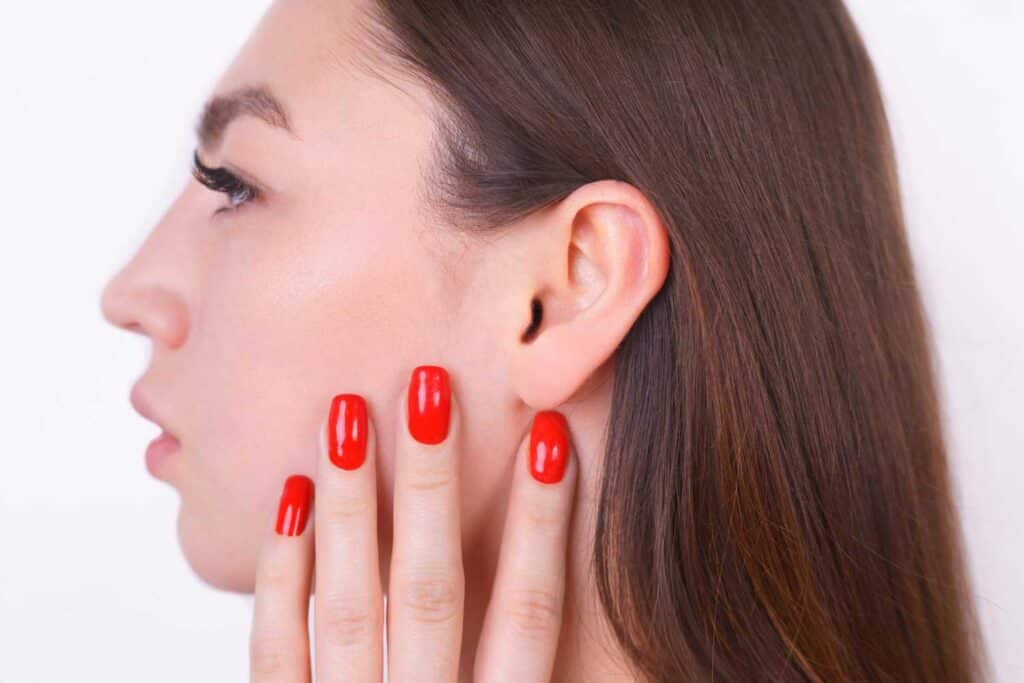
From a surgical standpoint, prominent ears are typically caused by one of two things: either the natural fold of the ear—the antihelical fold—is underdeveloped, or the central portion of the ear, called the conchal bowl, is too deep and pushes the ear outward. Often, it is a combination of both. These are structural characteristics, not surface issues, which is why creams, devices, or non-surgical treatments simply do not work once the cartilage has matured.
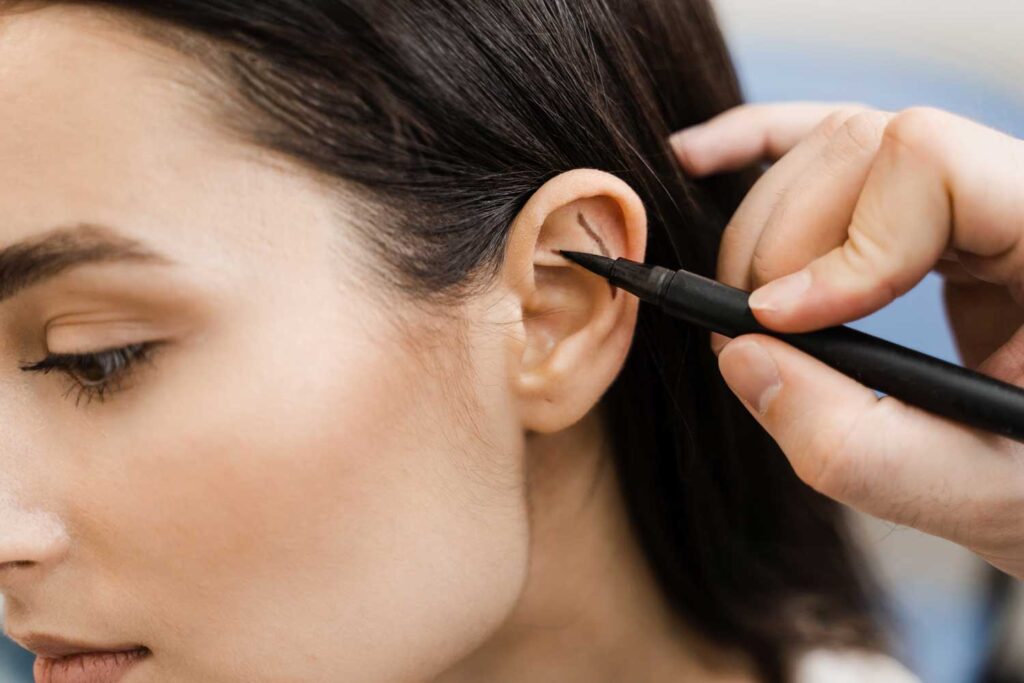
The only reliable way to correct this is through precise cartilage reshaping.
What makes otoplasty unique is that millimeters matter. A change of just a few millimeters in ear projection can dramatically alter how the face is perceived. That is why we believe this procedure requires a level of restraint and precision that is sometimes underestimated. Overcorrection is just as problematic as undercorrection. Ears that are pinned too tightly can look unnatural and can be just as noticeable as ears that protrude. On occasion, patients come for consultations requesting otoplasty correction of ear-pinning surgeries performed by other surgeons.
The goal is not to eliminate projection. The goal is to restore natural proportion.
In our plastic surgery practice in Newport Beach, we approach otoplasty as a procedure of refinement rather than reduction. The ear must maintain its natural curves, its soft transitions, and its relationship to the surrounding facial features. This is where experience and aesthetic judgment become critical. The surgery itself is technically straightforward, but achieving a result that looks completely natural requires a deep understanding of facial balance.
Patients often ask what the surgery involves, and our answer is simpler than most expect. For mature patients, the procedure typically takes one to two hours. Incisions are usually placed behind the ear, where they are well hidden. The cartilage is then reshaped using a combination of suture techniques and, when necessary, gentle sculpting. The ear is repositioned closer to the head in a way that preserves its natural contour. The result is a subtle natural repositioning—not a dramatic alteration.
Recovery is generally easier than patients anticipate. A dressing is worn for the first few days, followed by a lighter headband at night for several weeks. Most patients return to normal activities within one to two weeks. Discomfort is typically mild and manageable. The ears may appear slightly overcorrected early on due to swelling, but they settle into a natural position as healing progresses.
One of the most important things to understand about otoplasty is that the results are permanent. Once the cartilage is reshaped and stabilized, it maintains its new position long-term. This is not a temporary improvement. It is a structural correction.
And yet, despite its effectiveness, many patients delay this procedure for years—sometimes decades. Adults often tell us they have been aware of their ears since childhood. They learned to adjust their hair, avoid certain angles in photographs, or simply accept something that bothered them. What is interesting is that after surgery, they often describe a sense of relief that is out of proportion to the size of the procedure.
Our patients stop thinking about their ears. That is the real outcome!
Surgical correction of childhood protruding ears is also one of the few cosmetic procedures we commonly perform in toddlers and young children. The ears reach near-adult size by around age five, which makes early correction possible. For some children, this can prevent years of self-consciousness or teasing. However, it is important that the decision is made thoughtfully, considering both the physical and emotional aspects of surgery.
Adults, on the other hand, often seek otoplasty at transition points—before a new job, after a life change, or simply when they decide it is time to address something they have been aware of for a long time. There is no upper age limit for this procedure. The principles remain the same regardless of age: natural results, balanced proportions, and long-term stability. It is not uncommon for a patient having a facelift to request improvement in the appearance of their large or overly projecting ears.
As noted above, no discussion of otoplasty would be complete without addressing revision surgery. While most ear surgeries are successful, there are cases where the results are not ideal. Ears may be overcorrected, asymmetrical, or gradually return to their original position. Revision otoplasty is more complex because the normal anatomy has been altered, and scar tissue is present. It requires a more advanced level of surgical planning and technique. In these cases, our goal is often to restore what should have been achieved in the first place: a natural, balanced ear position.
As with any surgical procedure, there are risks. These include infection, bleeding, asymmetry, and the possibility of recurrence. However, when performed by experienced, board-certified plastic surgeons, complications are uncommon. Careful technique and proper post-operative care play a significant role in minimizing risk. These are reasons to consult with the plastic surgeons at Pacific Center for Plastic Surgery in Newport Beach, either in-person or virtually.
Cost is another common question. Otoplasty typically ranges from approximately $3,500 to $8,500, depending on the complexity of the procedure, anesthesia, and facility considerations. While cost is an important factor, it should not be the primary deciding point. This is a procedure where precision and experience matter, and revision surgery—both emotionally and financially—is far more costly than doing it correctly the first time.
So, what is the takeaway?
The naked truth about otoplasty is this: it is not about changing who you are; it is about removing a distraction. It is about allowing the rest of your face to be seen in harmony with beautiful proportions. When done well, it is one of the most subtle yet impactful procedures in aesthetic surgery.
Most patients don’t want to look different. They want to look like themselves—just more balanced.
And when that happens, the result is not just visual. It is psychological. It is the quiet confidence that comes from no longer thinking about something that once occupied your attention.
If you are considering otoplasty, the most important step is not the surgery itself; it is the consultation. A thoughtful evaluation, an honest discussion, and a clear understanding of your goals will determine whether this procedure is right for you. In the end, the best results in plastic surgery are not just the ones that are seen; they are the ones that make you feel confident and good about yourself.
Let us help you realize an emotional and physical self-improvement that will last a lifetime.
Contact us to begin your journey today.
References
American Society of Plastic Surgeons (2023) Plastic Surgery Statistics Report. Available at: https://www.plasticsurgery.org
Mustardé, J.C. (1963) ‘The correction of prominent ears using simple mattress sutures’, British Journal of Plastic Surgery, 16, pp. 170–178.
Furnas, D.W. (1968) ‘Correction of prominent ears by conchamastoid sutures’, Plastic and Reconstructive Surgery, 42(3), pp. 189–193.
Janis, J.E. and Rohrich, R.J. (2005) ‘Otoplasty: Clinical approach and techniques’, Plastic and Reconstructive Surgery, 115(4).
Songu, M. and Adibelli, Z.H. (2010) ‘Otoplasty outcomes and patient satisfaction’, Aesthetic Plastic Surgery, 34(2), pp. 243–247.